Navigating midlife and menopause often brings a focus on supporting overall well-being. Coenzyme Q10 (CoQ10), particularly in its ubiquinol form, is a compound that naturally occurs in the body and plays a role in cellular energy production.
Many women consider supplementation, and a common question arises: when is the best time to take CoQ10 to potentially maximize its absorption and effectiveness? While research specifically on optimal timing for women in midlife is limited, we can explore general considerations for CoQ10 supplementation.
Understanding CoQ10 Absorption and Bioavailability
CoQ10 is a fat-soluble compound, meaning it dissolves in fats and oils. This characteristic is important because it influences how the body absorbs it. Unlike water-soluble vitamins that can be taken on an empty stomach, fat-soluble nutrients generally benefit from being consumed with a meal containing some dietary fat.
That chemistry has a practical cost. A pharmacokinetics review notes that because of its hydrophobicity and large molecular weight, CoQ10 is absorbed slowly and only to a limited degree, with blood levels peaking around six hours after an oral dose.[1] Anything that helps it dissolve in the gut, including the meal it is taken with, therefore matters more than it would for a water-soluble vitamin.
The ubiquinol form of CoQ10 is often marketed as better absorbed than ubiquinone, especially as we age. The evidence is more mixed than the marketing. In a crossover study of 21 healthy adults aged 65 to 74, a single 100 mg ubiquinol capsule raised total plasma CoQ10 about 1.7-fold relative to standard ubiquinone, a difference that was not statistically significant, and the CoQ10 that reached the blood circulated mostly as ubiquinol whichever form was swallowed.[2] Whichever form you choose, the presence of dietary fat still plays a role in its absorption profile.


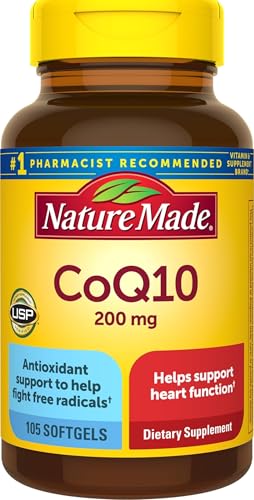
General Recommendations: Taking CoQ10 with Food
Given CoQ10’s fat-soluble nature, a general recommendation for supplementation is to take it with a meal that includes some fat. This approach is thought to enhance its absorption into the bloodstream. A meal containing healthy fats, such as those found in avocados, nuts, seeds, or olive oil, could be beneficial. Food itself appears to help: a pharmacology study found that food intake enhanced the intestinal absorption of CoQ10,[3] and in a small study of 13 participants, a reduced-form CoQ10 supplement taken in miso soup produced roughly 1.5 times more CoQ10 in the blood over the first five hours than the same supplement taken in other soups or a raw egg sauce.[4]
Some individuals prefer to take their CoQ10 supplement with their largest meal of the day, which often contains the most fat. Others split the daily dose, taking half with breakfast and half with dinner, and there is some trial support for that. In a 20-day randomized trial in 60 healthy men who were told to take their capsules with meals, two 100 mg doses a day raised serum CoQ10 more than a single 200 mg dose, and CoQ10 dissolved in an oil-based softgel raised levels more than the same amount as crystalline powder.[5] That was one trial in men, so treat it as a reasonable tiebreaker rather than a rule for midlife women.
Morning vs. Evening: Is There an Optimal Time?
For many supplements, the specific time of day can influence their effects. However, for CoQ10, there is no strong evidence to suggest a definitively ‘best’ time of day (morning versus evening) that universally applies to all individuals, particularly for women in midlife. The primary consideration remains taking it with food to aid absorption.
Some individuals report that taking CoQ10 in the morning or early afternoon works well for them, while others find no difference with evening intake. If you are taking other medications or supplements, it might be prudent to discuss timing with a healthcare professional to avoid potential interactions, although CoQ10 is generally well-tolerated.

Consistency is Key for Potential Benefits
More important than the precise minute you take your CoQ10 supplement each day is the consistency of your intake. CoQ10 is not a compound that provides immediate effects; its potential benefits are generally observed over time with regular supplementation. Establishing a routine helps ensure you don’t miss doses and allows your body to maintain consistent levels.
Developing a habit, such as taking it with a specific meal each day, can help maintain consistency. The sustained presence of CoQ10 in your system is likely more significant than whether it’s taken at 8 AM versus 10 AM, as long as it’s absorbed effectively. Pharmacokinetics points the same way: CoQ10’s elimination half-life is about 33 hours,[1] so blood levels shift slowly from one day to the next, which is why a dose taken a couple of hours earlier or later than usual is unlikely to matter much once you are taking it steadily.
What We Don’t Know Yet: Specific Timing for Midlife Women
It’s important to acknowledge that specific research on the optimal timing of CoQ10 supplementation tailored to the unique physiological changes experienced by women in midlife and during menopause is limited. While general absorption principles apply, more targeted studies could provide valuable insights.
Factors like hormonal fluctuations, changes in metabolism, and individual lifestyle variations during midlife might subtly influence CoQ10 utilization. However, without specific evidence, current recommendations focus on general absorption principles and consistent intake.
References
- Coenzyme Q10: absorption, tissue uptake, metabolism and pharmacokinetics. Free Radical Research, 2006
- Comparative Bioavailability of Different Coenzyme Q10 Formulations in Healthy Elderly Individuals. Nutrients, 2020
- Improvement in intestinal coenzyme Q10 absorption by food intake. Yakugaku Zasshi, 2007
- Miso Soup Consumption Enhances the Bioavailability of the Reduced Form of Supplemental Coenzyme Q10. Journal of Nutrition and Metabolism, 2020
- Effect on absorption and oxidative stress of different oral Coenzyme Q10 dosages and intake strategy in healthy men. BioFactors, 2005
These statements have not been evaluated by the Food and Drug Administration. This information is not intended to diagnose, treat, cure, or prevent any disease. Content is for informational purposes only and is not medical advice; consult a qualified healthcare provider before starting any supplement. As an Amazon Associate we earn from qualifying purchases.