As you navigate the dynamic shifts of perimenopause or manage health conditions like high cholesterol with statin medications, you might find yourself searching for effective ways to support your energy levels and cardiovascular health. Coenzyme Q10 (CoQ10) often emerges in these discussions, lauded for its role in cellular energy production and antioxidant defense. But with a dizzying array of supplements available, how do you discern the truly beneficial from the merely marketed?
This comprehensive guide from CoQ10Hub is designed to cut through the confusion, offering an evidence-based look at CoQ10, specifically focusing on its most absorbable form, ubiquinol. We’ll explore its critical functions, examine its impact on perimenopausal energy and heart health, and address its crucial role for statin users, empowering you to make informed decisions for your well-being in 2026.
CoQ10Hub is a participant in the Amazon Services LLC Associates Program, an affiliate advertising program designed to provide a means for sites to earn advertising fees by linking to Amazon.com and affiliated sites. This means that if you click on one of our product links and make a purchase, CoQ10Hub may receive a small commission at no extra cost to you.
Understanding CoQ10: Ubiquinol vs. Ubiquinone
Coenzyme Q10, or CoQ10, is a fat-soluble, vitamin-like substance naturally produced by the body. It plays two primary, indispensable roles: as a vital component of the electron transport chain in mitochondria, where it’s crucial for ATP (cellular energy) production, and as a potent antioxidant, protecting cells from oxidative damage.
There are two main forms of CoQ10 found in supplements: ubiquinone and ubiquinol. Ubiquinone is the oxidized form, which the body must convert into ubiquinol to be utilized. Ubiquinol is the active, antioxidant form, directly ready for use by the body’s cells.
Research consistently indicates that ubiquinol boasts superior bioavailability compared to ubiquinone. Studies have shown that ubiquinol can achieve significantly higher plasma CoQ10 levels at lower doses, making it the preferred choice for many individuals, particularly as we age or have specific health needs where absorption may be compromised.
CoQ10 and Cellular Energy in Perimenopause
Women often report increased fatigue and decreased energy during perimenopause. While hormonal fluctuations are a primary driver, mitochondrial function and cellular energy production can also be impacted. CoQ10 is central to this process, acting as a crucial coenzyme in the mitochondria’s energy factories.
The body’s natural production of CoQ10 begins to decline around age 25, with a more noticeable reduction after 40. This age-related decline coincides with the onset of perimenopause for many women, suggesting a potential link between lower CoQ10 levels and reported energy dips. Supplementing with ubiquinol may support the efficiency of ATP production, potentially mitigating some aspects of perimenopausal fatigue.

It is important to manage expectations; CoQ10 is not a magic bullet for all perimenopausal symptoms. However, by supporting fundamental cellular energy pathways, it offers a foundational approach to maintaining vitality during this transitional phase. While direct, large-scale clinical trials specifically on CoQ10 for perimenopausal energy are still emerging, the mechanistic understanding supports its potential benefit for cellular energy production.
CoQ10 for Robust Heart Health
The heart is one of the most metabolically active organs in the body, requiring a constant and substantial supply of energy. CoQ10 is highly concentrated in heart muscle cells, underscoring its critical role in maintaining cardiovascular function. Its dual roles in energy production and as an antioxidant are particularly beneficial for heart health.
Numerous studies have investigated CoQ10’s impact on various aspects of heart health. For individuals with heart failure, CoQ10 supplementation has shown promise in improving symptoms and quality of life. A meta-analysis published in the Journal of the American College of Cardiology Heart Failure found that CoQ10 supplementation was associated with a significant reduction in mortality and hospitalizations for heart failure patients.
CoQ10’s antioxidant properties also help protect the cardiovascular system from oxidative stress, a known contributor to arterial damage and the progression of atherosclerosis. By scavenging free radicals, ubiquinol helps maintain the integrity of blood vessels and supports healthy endothelial function, which is vital for blood pressure regulation.
CoQ10 Depletion and Statin Medications
One of the most compelling and widely recognized reasons to consider CoQ10 supplementation is for individuals taking statin drugs. Statins, such as atorvastatin (Lipitor) and simvastatin (Zocor), are highly effective at lowering cholesterol by inhibiting HMG-CoA reductase, an enzyme involved in cholesterol synthesis. Unfortunately, this same enzyme is also crucial for the body’s natural production of CoQ10.
Consequently, statin therapy can significantly deplete CoQ10 levels in the body, leading to a range of side effects, most notably muscle pain and weakness (myalgia), which affects a substantial percentage of statin users. This depletion is a well-established mechanism, and numerous studies have documented reduced CoQ10 concentrations in individuals on statins.
Supplementing with CoQ10, particularly the more bioavailable ubiquinol form, is often recommended by healthcare professionals to counteract this depletion. While research on CoQ10’s ability to definitively reverse all statin-induced myalgia is mixed, several studies indicate that it can reduce the severity and frequency of muscle symptoms, improving tolerability of these life-saving medications. It’s crucial to discuss CoQ10 supplementation with your doctor if you are taking statins.
Key Considerations When Choosing a CoQ10 Supplement
Navigating the supplement aisle can be daunting. Here are critical factors to consider when selecting a high-quality ubiquinol supplement.
Form: Ubiquinol is Superior
As discussed, ubiquinol offers significantly better absorption and bioavailability compared to ubiquinone. Look for products that explicitly state “ubiquinol” on the label. This ensures your body can readily use the CoQ10 without needing to convert it.

Dosage and Delivery
Typical daily dosages for ubiquinol range from 100 mg to 200 mg, though higher doses may be recommended for specific conditions under medical supervision. CoQ10 is fat-soluble, so look for supplements formulated with an oil base (e.g., olive oil, sunflower oil) or in softgel form, which enhances absorption. Taking CoQ10 with a meal containing dietary fat can further improve its uptake.
Quality and Purity
Choose brands that adhere to Good Manufacturing Practices (GMP) and ideally offer third-party testing for purity and potency. This ensures the product contains the stated amount of CoQ10 and is free from contaminants. Transparency from the manufacturer regarding sourcing and testing is a positive indicator.
Comparing Ubiquinol and Ubiquinone
Here is a quick comparison to help solidify your understanding of these two forms of CoQ10:
| Feature | Ubiquinol | Ubiquinone |
|---|---|---|
| Chemical Form | Reduced (Active) | Oxidized (Inactive) |
| Absorption | Higher bioavailability, better absorbed | Lower bioavailability, requires conversion |
| Antioxidant Activity | Directly acts as an antioxidant | Must be converted to ubiquinol to act as an antioxidant |
| Body’s Use | Ready for immediate use by cells | Must be converted to ubiquinol by the body |
| Consider for | Aging individuals, statin users, those with compromised absorption | Younger, healthy individuals (though ubiquinol still preferred) |
| Cost | Generally more expensive | Generally less expensive |
Finding the Best Ubiquinol Supplements (2026)
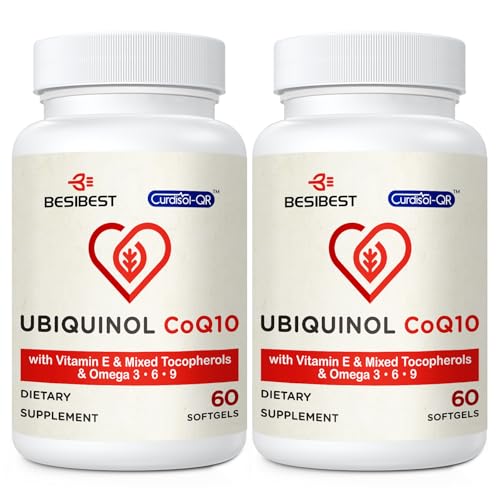
When searching for ubiquinol supplements, focus on key characteristics rather than specific brand names, as product formulations and availability can change. Look for products that clearly state “Ubiquinol” on the label and ideally mention the use of Kaneka QH, a patented and well-researched form of ubiquinol. Prioritize supplements sold in softgel capsules, as this formulation typically optimizes absorption. Consider products that specify a carrier oil, such as olive oil or medium-chain triglycerides (MCT oil), to further enhance bioavailability.
For example, you might look for ubiquinol softgels, Kaneka QH ubiquinol, or ubiquinol with olive oil. Always check for third-party certifications or quality assurance statements from the manufacturer.
Frequently Asked Questions (FAQ) About CoQ10
What is the best time of day to take CoQ10?
CoQ10 is best taken with a meal containing fat, as it is a fat-soluble compound. Many people prefer to take it with breakfast or dinner to maximize absorption.
Are there any side effects of CoQ10?
CoQ10 is generally well-tolerated. Mild side effects can include stomach upset, nausea, diarrhea, or loss of appetite. These are typically rare and mild.
How long does it take for CoQ10 to work?
The effects of CoQ10 supplementation are not immediate. It can take several weeks to a few months of consistent use to see noticeable benefits, as the body’s CoQ10 levels gradually increase.
Can I take CoQ10 with other medications?
While generally safe, CoQ10 can interact with certain medications, such as blood thinners (e.g., warfarin) and some blood pressure medications. Always consult your healthcare provider before starting any new supplement, especially if you are on prescription drugs.
Is a higher dose of CoQ10 always better?
Not necessarily. The optimal dose depends on individual needs, age, and health conditions. For general support, 100-200 mg of ubiquinol daily is common. For specific conditions like statin-induced depletion or heart failure, higher doses (e.g., 200-400 mg) may be recommended by a doctor.
Can I get enough CoQ10 from food?
While CoQ10 is present in foods like organ meats, fatty fish, and whole grains, the amounts are typically much lower than what is provided by supplements. It is challenging to obtain therapeutic levels of CoQ10 through diet alone, especially as natural production declines with age or due to medication use.

***
These statements have not been evaluated by the FDA. This product is not intended to diagnose, treat, cure, or prevent any disease.


These statements have not been evaluated by the Food and Drug Administration. This information is not intended to diagnose, treat, cure, or prevent any disease. Content is for informational purposes only and is not medical advice; consult a qualified healthcare provider before starting any supplement. As an Amazon Associate we earn from qualifying purchases.
