Ready to buy? Check current prices on Amazon and compare deals before you decide.
Perimenopause is a significant life stage for women, often accompanied by a range of symptoms, including changes in energy levels and increased feelings of fatigue. Navigating these changes can be challenging, prompting many to seek ways to support their well-being.
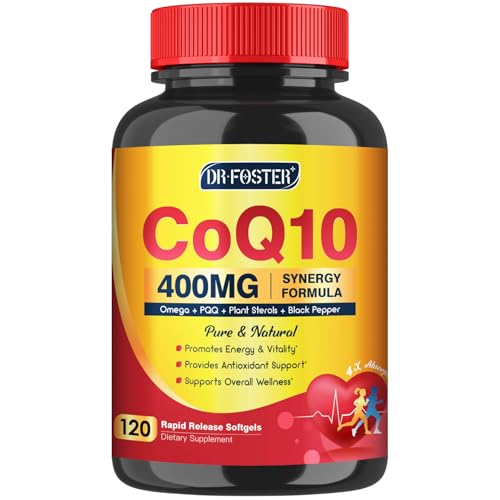
Coenzyme Q10 (CoQ10), particularly in its ubiquinol form, is a compound naturally present in the body that plays a role in cellular energy production. While research specifically on CoQ10 for perimenopausal fatigue is limited, understanding its general functions can offer insights into its potential relevance during this transitional period.
Understanding Perimenopausal Fatigue
Perimenopause, the transition leading up to menopause, can last for several years. During this time, fluctuating hormone levels, particularly estrogen, can contribute to various physical and emotional changes. Many women report experiencing persistent fatigue that isn’t always relieved by rest, alongside other common symptoms like hot flashes, sleep disturbances, and mood shifts.
The exact mechanisms behind perimenopausal fatigue are complex and likely multifactorial. Sleep disruptions, night sweats, and the physiological impact of hormonal changes can all contribute to a feeling of being constantly drained. Managing fatigue often involves a holistic approach, including lifestyle adjustments and sometimes, exploring supplemental support.
The Role of CoQ10 in Cellular Energy
CoQ10 is a fat-soluble, vitamin-like substance found in virtually all cells of the human body. It is particularly concentrated in organs with high metabolic activity, such as the heart, liver, and kidneys. Its primary role is in the mitochondria, the ‘powerhouses’ of our cells, where it is a crucial component of the electron transport chain, a process that generates adenosine triphosphate (ATP) – the main energy currency of the cell.[1]
Beyond its role in energy production, CoQ10 also functions as an antioxidant, helping to protect cells from oxidative damage. The body produces CoQ10 naturally, but its levels can decline with age, and certain medications or health conditions may also affect its synthesis or utilization.
CoQ10 and General Fatigue: What the Evidence Suggests
While direct research on CoQ10 specifically for perimenopausal fatigue is not readily available, some studies have explored CoQ10’s potential in addressing general fatigue or fatigue associated with other conditions. This broader research can offer some context, though it’s important to remember that general findings may not directly translate to the unique physiological context of perimenopause.
Some research has investigated CoQ10’s impact on fatigue in conditions where mitochondrial dysfunction or oxidative stress are believed to play a role. However, the strength of this evidence varies, and many studies are small or preliminary. It’s important to approach these findings with a measured perspective, understanding that more robust research is often needed to draw definitive conclusions about specific benefits for fatigue.
The body’s natural production of CoQ10 declines with age, which coincides with the perimenopausal period.[2] This age-related decline has led to speculation about whether supplementation might support cellular energy processes when natural levels are lower. However, this is an area where specific research for perimenopausal women experiencing fatigue is not yet established.

Ubiquinol vs. Ubiquinone: Understanding the Forms of CoQ10
CoQ10 exists in two primary forms in the body: ubiquinone and ubiquinol. Ubiquinone is the oxidized form, while ubiquinol is the active, antioxidant form. For CoQ10 to be utilized in cellular energy production and as an antioxidant, ubiquinone must be converted to ubiquinol within the body.
As we age, the body’s ability to efficiently convert ubiquinone to ubiquinol may decrease. For this reason, many CoQ10 supplements are available in the ubiquinol form, which is thought to be more readily absorbed and utilized by the body, especially for older individuals or those with certain health considerations. This distinction is often highlighted when discussing CoQ10 supplementation, particularly in the context of supporting energy levels.
Considering CoQ10 During Perimenopause: Practical Aspects
If considering CoQ10 as part of a strategy to manage energy and fatigue during perimenopause, it’s helpful to understand a few practical points. CoQ10 is fat-soluble, meaning it’s best absorbed when taken with a meal that contains some fat. The dosage can vary widely, and what might be appropriate for one individual may not be for another.
As with any supplement, consistency is often key when evaluating potential effects. It’s also crucial to remember that supplements are just one piece of the puzzle. Addressing perimenopausal fatigue often benefits from a holistic approach that includes adequate sleep, regular physical activity, stress management techniques, and a balanced diet.


References
- Clinical applications of coenzyme Q10. Frontiers in Bioscience (Landmark Edition) (2014). PMID 24389208
- Coenzyme Q10 supplementation – in ageing and disease. Mechanisms of Ageing and Development (2021). PMID 34129891
These statements have not been evaluated by the Food and Drug Administration. This information is not intended to diagnose, treat, cure, or prevent any disease. Content is for informational purposes only and is not medical advice; consult a qualified healthcare provider before starting any supplement. As an Amazon Associate we earn from qualifying purchases.