Two CoQ10 products can list the same milligram dose on the label and deliver very different amounts into the bloodstream. The reason usually has nothing to do with the dose and everything to do with the physical state the CoQ10 is in inside the capsule.
Ready to buy? Check current prices on Amazon and compare deals before you decide.
What “Crystal Form” Actually Means
Pure CoQ10 is not an oil. At room temperature it is a crystalline solid, a yellow-orange powder in which the molecules are locked into an ordered lattice. For absorption to happen, that lattice has to come apart so individual CoQ10 molecules can be picked up by the fat-digestion machinery of the small intestine. Crystals that stay intact travel through the gut and leave in the stool without ever entering circulation [1].
This is why CoQ10 is described as having poor oral bioavailability. It is a large, fat-soluble, water-insoluble molecule that depends on the same lipid absorption pathway used by fat-soluble vitamins, and only a small fraction of a typical oral dose is taken up [2].
Body Temperature Sits Below CoQ10’s Melting Point
CoQ10 crystals melt at roughly 48 degrees Celsius. Human body temperature is about 37 degrees. That gap is the entire practical problem: the gut is not warm enough to melt CoQ10 crystals on its own, so a capsule of dry crystalline powder has no reliable mechanism for dispersing its contents into single molecules.
This is also why the advice to take CoQ10 with a fat-containing meal is more than a general absorption tip. Dietary fat stimulates bile release and forms the mixed micelles that CoQ10 has to partition into, which gives whatever did dissolve a route across the intestinal lining [2].
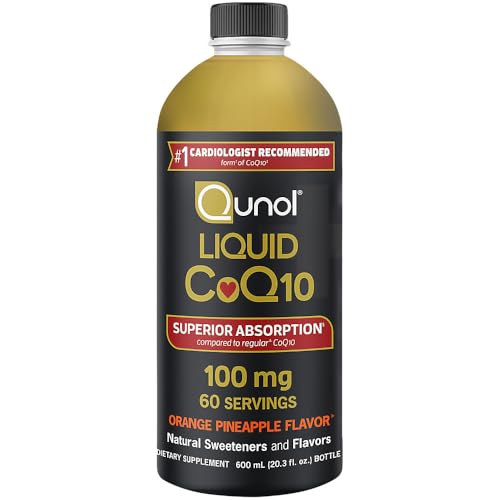

How Formulators Break the Crystals Apart
The formulation problem is therefore a dissolution problem, and the approaches that work all pre-dissolve the CoQ10 before it is ever swallowed rather than asking the gut to do it:
- Oil suspensions and solubilized softgels. CoQ10 is dispersed in a carrier oil, often with heating during manufacture so the crystals dissolve and stay dissolved in the finished softgel.
- Self-emulsifying and self-nanoemulsifying systems. A blend of oil, surfactant and co-surfactant that spontaneously forms fine droplets on contact with gut fluid. These systems have shown markedly improved dissolution and bioavailability compared with unformulated CoQ10 [3].
- Nanoemulsions, liposomes and cyclodextrin complexes. Newer carriers that keep CoQ10 in a dispersed state and reduce the particle size it presents to the intestine [4].
The common thread is that none of them rely on body heat. They either deliver CoQ10 already in solution or supply the conditions for it to disperse instantly.

Crystallinity and Ubiquinol Are Two Separate Questions
It is easy to assume that ubiquinol, the reduced form, sidesteps this issue. It does not. Ubiquinol is also a crystalline solid in its raw state, and a poorly formulated ubiquinol product can crystallize the same way a poorly formulated ubiquinone product does. Form (ubiquinol versus ubiquinone) and physical state (crystalline versus solubilized) are independent variables.
Comparative work in older adults bears this out: when different CoQ10 formulations are tested head to head, the blood levels achieved differ by formulation and not purely by which chemical form is on the label [5]. A well-solubilized ubiquinone can outperform a crystalline ubiquinol, which is the opposite of what the marketing hierarchy usually implies.
What a Label Can and Cannot Tell You
There is no required disclosure for crystalline state, so this has to be inferred. A few signals are reasonably informative:
- Softgel with a named oil is a better sign than a dry two-piece capsule or a tablet, because the CoQ10 is at least suspended in a lipid.
- Named delivery technology such as a self-emulsifying system, solubilized or crystal-free wording, or a specific branded carrier, indicates the manufacturer addressed dissolution deliberately.
- Absorption enhancers such as black pepper extract or an added lipid blend suggest attention to uptake, though they address a different step than crystallinity itself.
- A plain powder capsule with a very high milligram count is the least informative combination. A larger dose of material that does not dissolve does not reliably produce a larger dose in the blood.
Practical Takeaway
Milligrams on the front of the bottle describe what went into the capsule, not what reaches the bloodstream. Because CoQ10 crystals do not melt at body temperature, the delivery format is doing more work than the dose number in determining how much is absorbed. A solubilized softgel taken with a meal containing fat is the straightforward default, and comparing two products on dose alone, without accounting for how each one handles dissolution, is not a meaningful comparison.
References
- Plasma coenzyme Q10 response to oral ingestion of coenzyme Q10 formulations. Mitochondrion, 2007
- Bioavailability of Coenzyme Q10: An Overview of the Absorption Process and Subsequent Metabolism. Antioxidants (Basel), 2020
- Self-Nanoemulsifying Drug Delivery System of Coenzyme Q10 with Improved Dissolution, Bioavailability, and Protective Efficiency on Liver Fibrosis. AAPS PharmSciTech, 2017
- Bioavailability enhancement of coenzyme Q10: An update of novel approaches. Arch Pharm (Weinheim), 2024
- Comparative Bioavailability of Different Coenzyme Q10 Formulations in Healthy Elderly Individuals. Nutrients, 2020
These statements have not been evaluated by the Food and Drug Administration. This information is not intended to diagnose, treat, cure, or prevent any disease. Content is for informational purposes only and is not medical advice; consult a qualified healthcare provider before starting any supplement. As an Amazon Associate we earn from qualifying purchases.