As women navigate midlife and menopause, understanding how our bodies change and what support they might benefit from becomes increasingly relevant. Coenzyme Q10 (CoQ10), a compound naturally produced in the body, plays a role in energy production within cells and acts as an antioxidant. Our natural production of CoQ10 tends to decline with age.
This article explores considerations for CoQ10 dosage specifically for women over 50, focusing on the ubiquinol form, and how it might support various aspects of health during this life stage. We’ll review available evidence to help you make informed decisions about dietary supplementation.
The Role of CoQ10 in the Body and Age-Related Decline
CoQ10 is a fat-soluble, vitamin-like substance found in nearly every cell of the body. It is crucial for the electron transport chain, a process within mitochondria that generates cellular energy. Beyond its role in energy metabolism, CoQ10 also functions as a powerful antioxidant, helping to neutralize free radicals that can contribute to cellular damage.
With advancing age, the body’s natural production of CoQ10 can decrease. This decline is a normal part of aging, and it means that older individuals may have lower levels of CoQ10 compared to younger adults. This age-related reduction in CoQ10 has led researchers to investigate whether supplementation might offer benefits, particularly for supporting cellular function and antioxidant defenses in midlife and beyond.


Ubiquinol vs. Ubiquinone: Why Form Matters for Women Over 50
CoQ10 exists in two primary forms in the body: ubiquinone and ubiquinol. Ubiquinone is the oxidized form, which the body must convert into ubiquinol, the active antioxidant form, to be utilized. Ubiquinol is the form that directly participates in antioxidant activity and is readily absorbed by the body.
For women over 50, where natural CoQ10 production may be lower and the body’s ability to convert ubiquinone to ubiquinol might be less efficient, supplementing directly with ubiquinol may be a practical consideration. Research in mice found that lifetime supplementation with ubiquinol 10 did not clearly extend lifespan or slow aging [1]. Another study involving senescence-accelerated mice indicated that ubiquinol-10 supplementation could activate mitochondrial functions and potentially decelerate senescence [2]. While these are animal studies, they highlight the potential importance of the ubiquinol form.
Additionally, studies in elderly patients undergoing aortic valve replacement have explored ubiquinol supplementation, examining its biochemical and clinical aspects [3]. This further suggests that ubiquinol may be a relevant form for older populations.

General CoQ10 Dosage Considerations for Adults
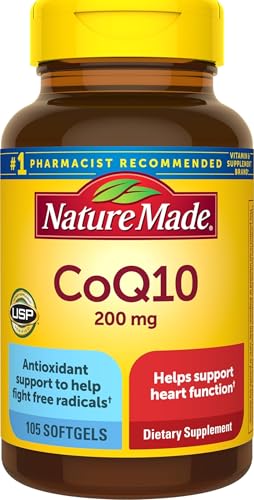
Determining an optimal CoQ10 dosage can vary depending on individual needs and health goals. General recommendations for CoQ10 supplementation often range from 100 mg to 200 mg per day for healthy adults, though some research has explored higher dosages for specific conditions. It’s important to remember that these are general guidelines, and individual responses can differ.
For women over 50, the focus shifts to supporting age-related physiological changes. While specific dosage recommendations tailored exclusively to ‘healthy women over 50’ are not extensively defined in research, studies involving older populations often utilize dosages in this range. For example, some research on the effects of CoQ10 alongside a Mediterranean diet in elderly men and women has explored its impact on metabolomic profiles [4] and postprandial antioxidant effects [5], suggesting the relevance of CoQ10 in this demographic.
Specific Considerations for Women’s Health Over 50
While direct research on CoQ10 dosage specifically for ‘women over 50’ navigating menopause symptoms is still evolving, existing studies provide insights into CoQ10’s broader roles that may be relevant. For instance, CoQ10 has been studied in contexts related to reproductive health and ovarian aging. A systematic review and meta-analysis examined antioxidants, including CoQ10, in women with ovarian aging [6]. Another randomized, double-blind, placebo-controlled trial investigated the effect of CoQ10 pretreatment on ovarian reserve in women undergoing hysterectomy with bilateral salpingectomy [7]. While these studies are often focused on fertility, they underscore CoQ10’s involvement in biological processes that may be relevant to the aging female body.
Beyond reproductive health, CoQ10’s impact on metabolic profiles and mental health parameters has been studied in women with polycystic ovary syndrome [8]. Additionally, CoQ10 has been investigated for its potential role in cardiovascular diseases [9], a health area that becomes increasingly important for women in midlife and beyond. Research has also explored CoQ10’s effects, along with other supplements, on fatigue in patients with fibromyalgia [10]. These diverse areas of research suggest that CoQ10 may support various bodily functions that are important to women as they age, though more specific research on ‘healthy women over 50’ is needed to establish precise dosage recommendations for general well-being.
References
- Effects of lifetime supplementation with ubiquinol 10 on the lifespan and progression of aging in female C57BL/6 mice. Experimental gerontology, 2025
- Ubiquinol-10 supplementation activates mitochondria functions to decelerate senescence in senescence-accelerated mice. Antioxidants & redox signaling, 2014
- Ubiquinol supplementation in elderly patients undergoing aortic valve replacement: biochemical and clinical aspects. Aging, 2020
- Effects of the Mediterranean diet supplemented with coenzyme q10 on metabolomic profiles in elderly men and women. The journals of gerontology. Series A, Biological sciences and medical sciences, 2015
- Postprandial antioxidant effect of the Mediterranean diet supplemented with coenzyme Q10 in elderly men and women. Age (Dordrecht, Netherlands), 2011
- Antioxidants and Fertility in Women with Ovarian Aging: A Systematic Review and Meta-Analysis. Advances in nutrition (Bethesda, Md.), 2024
- The effect of coenzyme Q10 pretreatment on ovarian reserve in women undergoing hysterectomy with bilateral salpingectomy: a randomised, double-blind, placebo-controlled trial. The British journal of nutrition, 2025
- The effects of coenzyme Q10 supplementation on metabolic profiles and parameters of mental health in women with polycystic ovary syndrome. Gynecological endocrinology : the official journal of the International Society of Gynecological Endocrinology, 2022
- Coenzyme Q(10) and Cardiovascular Diseases. Antioxidants (Basel, Switzerland), 2021
- Effects of Coenzyme Q10, Tryptophan, and Magnesium Supplementation on Fatigue in Patients with Fibromyalgia – A Randomized Trial. Journal of dietary supplements, 2025
These statements have not been evaluated by the Food and Drug Administration. This information is not intended to diagnose, treat, cure, or prevent any disease. Content is for informational purposes only and is not medical advice; consult a qualified healthcare provider before starting any supplement. As an Amazon Associate we earn from qualifying purchases.