Most CoQ10 research stops at a surrogate marker: a blood level, an ejection fraction, a walk-test distance. Q-SYMBIO is the exception. It ran for two years, enrolled 420 people with moderate to severe chronic heart failure, and measured whether they were hospitalised or died. That makes it the most consequential CoQ10 trial ever completed, and also the most frequently half-quoted.
What follows is what the trial actually tested, why its 16-week and two-year results point in different directions, and how systematic reviewers have read the same numbers since. Heart failure is a diagnosed condition managed by a cardiology team. Nothing here is medical advice or a reason to change prescribed treatment.
What Q-SYMBIO Set Out to Test
Q-SYMBIO was a randomised, double-blind, multicentre trial of CoQ10 as an adjunctive treatment in chronic heart failure [1]. Adjunctive is the word that carries the weight: everyone stayed on standard heart failure therapy, and CoQ10 was added on top of it rather than substituted for anything.
Participants with moderate to severe heart failure were randomised to CoQ10 100 mg three times daily, 300 mg per day in total, or to placebo, and followed for two years [1]. The rationale was mechanical rather than speculative: CoQ10 is a required cofactor for mitochondrial energy production and also acts as an antioxidant, and low myocardial CoQ10 tracks with heart failure severity.
The trial carried two separate primary endpoints, one short-term and one long-term. The gap between what they showed explains almost every misreading of this study.

The 16-Week Results: Nothing Moved
The short-term primary endpoints, measured at 16 weeks, were change in New York Heart Association functional class, six-minute walk distance, and NT-proBNP, a blood marker of cardiac strain. On all three, the trial reported no significant changes [1].
That null result deserves stating plainly, because it is the part usually left out. Four months of 300 mg daily produced no measurable improvement in how far people could walk, how their symptoms were graded, or what their natriuretic peptide looked like. Any summary that jumps straight to the survival figures is skipping a real finding.
The separately published European sub-group analysis repeated the same pattern at three months: no significant changes in the short-term endpoints [2]. Whatever Q-SYMBIO found, it was not something that showed up quickly.
Where the Two-Year Numbers Separated
The long-term primary endpoint was a composite of major adverse cardiovascular events, analysed as time to first event across two years. Here the groups diverged: 15% of the CoQ10 group reached that endpoint against 26% on placebo, a hazard ratio of 0.50 (95% CI 0.32 to 0.80, p = 0.003) by intention-to-treat analysis [1].
Secondary endpoints moved the same way. Cardiovascular mortality was 9% against 16% (p = 0.026), all-cause mortality 10% against 18% (p = 0.018), and hospital stays for heart failure were also lower (p = 0.033) [1].
In the European sub-group, where adherence to guideline-directed therapy was higher than in the trial as a whole, the gap was wider still: 10 patients (9%) reached the composite endpoint against 33 (27%) on placebo, p = 0.001. That analysis also reported a significant improvement in left ventricular ejection fraction, which the main trial had not found [2].

How Cochrane Reads the Same Evidence
A Cochrane systematic review of CoQ10 in heart failure pooled 11 trials totalling 1,573 participants [3]. Its verdict is considerably more measured than the Q-SYMBIO headline.
Cochrane graded the all-cause mortality finding as moderate-quality evidence, a risk ratio of 0.58 (95% CI 0.35 to 0.95) with a number needed to treat of 13.3. The qualifier sits in the same sentence: that estimate rests on a single study of 420 participants [3]. That study is Q-SYMBIO. On Cochrane’s reading, the mortality signal in the entire literature is one trial.
Past mortality and heart failure hospitalisation, the review found low-quality and inconclusive evidence on myocardial infarction and stroke, and very low-quality evidence on ejection fraction and exercise capacity. It also recorded low-quality evidence that CoQ10 may increase adverse effects, or may make little to no difference. Its stated conclusion is that there is currently no convincing evidence to support or refute the use of CoQ10 for heart failure [3].
Both statements are true at once. The one large outcome trial was positive, and the reviewers who grade trial quality for a living do not regard a single trial as settled.
What Later Meta-Analyses Added
More recent pooled analyses added trials and found consistent direction. A 2024 meta-analysis of 33 randomised controlled trials reported lower all-cause mortality (RR 0.64, 95% CI 0.48 to 0.85, p = 0.002) and fewer heart failure hospitalisations (RR 0.50, 95% CI 0.37 to 0.67, p < 0.00001), both graded moderate quality, alongside improvements in NYHA class and brain natriuretic peptide graded low quality [4].
A separate 2024 systematic review looking specifically at ubiquinol across 16 studies reported a 40% reduction in heart-failure-related mortality and improved exercise capacity, but no significant difference in left ventricular ejection fraction [5].
The shape of the evidence is reasonably stable across all of it: mortality and hospitalisation signals recur, while functional and imaging measures do not reliably follow. Whether that reflects a genuine effect on hard outcomes or the weight of smaller trials of variable quality is precisely the question Cochrane flagged.
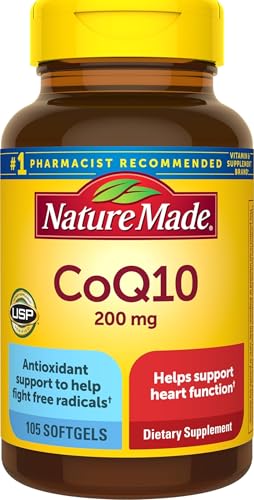
What This Does Not Mean If You Do Not Have Heart Failure
Q-SYMBIO enrolled people with moderate to severe chronic heart failure who were already on prescribed cardiac therapy. That is a specific clinical population, and the findings do not transfer to a healthy midlife adult taking CoQ10 for energy or general cardiovascular reassurance. A halving of event rates among people with a failing heart says nothing about event rates in people without one.
The trial also gives no support to substituting CoQ10 for prescribed medication. CoQ10 was added to standard therapy in every arm that received it, and the European result was strongest exactly where guideline-directed treatment adherence was highest [2].
If you have a heart failure diagnosis, the useful step is to raise Q-SYMBIO with your cardiologist rather than act on it independently. That matters more than usual here, because CoQ10 has a documented interaction with warfarin, is commonly discussed alongside statin-related CoQ10 depletion, and may affect blood pressure. General dosage guidance is no substitute for that conversation.

References
- The effect of coenzyme Q10 on morbidity and mortality in chronic heart failure: results from Q-SYMBIO: a randomized double-blind trial. JACC. Heart failure, 2014
- Effect of coenzyme Q10 in Europeans with chronic heart failure: A sub-group analysis of the Q-SYMBIO randomized double-blind trial. Cardiology journal, 2019
- Coenzyme Q10 for heart failure. The Cochrane database of systematic reviews, 2021
- Efficacy and safety of coenzyme Q10 in heart failure: a meta-analysis of randomized controlled trials. BMC cardiovascular disorders, 2024
- Evaluating the efficacy of ubiquinol in heart failure patients: a systematic review and meta-analysis. Future cardiology, 2024
These statements have not been evaluated by the Food and Drug Administration. This information is not intended to diagnose, treat, cure, or prevent any disease. Content is for informational purposes only and is not medical advice; consult a qualified healthcare provider before starting any supplement. As an Amazon Associate we earn from qualifying purchases.