Navigating midlife often brings new health considerations, and for many women, this can include changes in migraine patterns. Hormonal fluctuations during perimenopause are thought to play a role in these shifts, leading some to seek complementary approaches for managing their symptoms.
Among the various nutritional supplements explored for migraine support, Coenzyme Q10 (CoQ10) has garnered attention. This article will review the current evidence regarding CoQ10’s potential role in migraine prevention, particularly for women experiencing perimenopausal changes.
Understanding Migraines in Perimenopause
Migraines are complex neurological events characterized by severe headache, often accompanied by symptoms such as throbbing pain, sensitivity to light and sound, nausea, and aura. For many women, migraine patterns can change significantly during perimenopause, a transitional phase leading up to menopause. These changes are often attributed to fluctuating hormone levels, particularly estrogen, which can influence neurotransmitter activity and blood vessel function in the brain.
While hormonal therapies and prescription medications are common approaches for managing perimenopausal migraines, some individuals look for additional strategies. Understanding the potential mechanisms of action of supplements like CoQ10 can help inform these choices, in discussion with a healthcare provider.
What is CoQ10 and How Might It Relate to Migraines?
Coenzyme Q10 (CoQ10) is a compound naturally produced by the body and found in every cell. It plays a vital role in energy production within the mitochondria, the ‘powerhouses’ of our cells, and also functions as an antioxidant, helping to protect cells from damage. The body’s ability to produce CoQ10 may decline with age.
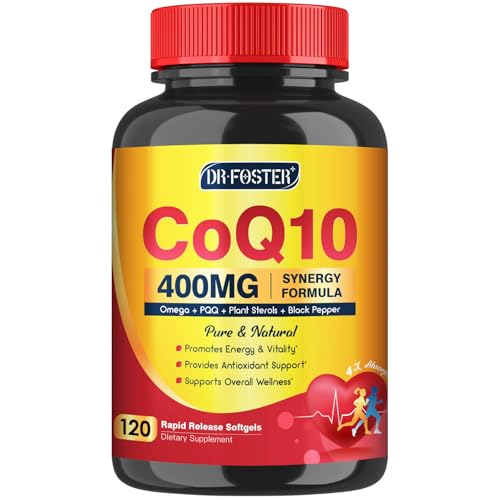
The exact mechanisms by which CoQ10 might influence migraines are not fully understood, but theories suggest it could relate to its role in cellular energy and antioxidant defense. A 2004 review examined whether shortfalls in some minerals, coenzymes and vitamins, CoQ10 among them, are involved in how migraines develop, and noted that the early support came from open trials, so larger double-blind studies were needed [1]. If the energy theory holds, CoQ10 could potentially help stabilize cellular processes that might otherwise contribute to migraine initiation.


CoQ10 and Migraine Prevention: The Evidence
Several studies have investigated the efficacy of CoQ10 as a prophylactic (preventive) treatment for migraines. A meta-analysis published in 2021 pooled six randomized trials with 371 adult participants. CoQ10 reduced how often migraine attacks happened and how long they lasted, but it did not significantly reduce how severe the headaches were [2].
Earlier research, including a double-blind, placebo-controlled trial from 2005 in 42 people with migraine, also explored CoQ10’s potential. This study found that CoQ10 was superior to placebo for attack frequency, headache days, and days with nausea in the third treatment month, and that 47.6% of patients treated with CoQ10 had a 50% or greater reduction in attack frequency, compared with 14.4% on placebo [3]. That works out to roughly one extra responder for every three people treated, though in a trial this small the figure is imprecise. The differences were measured in the third month of treatment, so a fair trial of CoQ10 takes about three months.
Another review from 2025 discussing nutraceuticals for headache management covers CoQ10 alongside riboflavin, magnesium, feverfew, melatonin and butterbur. It says riboflavin can be recommended for migraine prevention in adults, while it grades CoQ10 as Level C evidence with low adverse events [4]. So CoQ10 is a reasonable option to discuss with a doctor, but its evidence is thinner than riboflavin’s, and it’s important to note that individual responses can vary. The studies often include a broad adult population, and specific research focusing solely on perimenopausal women is less common, though the general mechanisms are thought to apply.

Dosage and Safety Considerations
The 2005 trial gave 100 mg three times a day, 300 mg in total [3]. The trials pooled in the 2021 meta-analysis did not all use the same amount, which is why its authors analysed the results by dose [2]. The 2005 trial reported CoQ10 as well tolerated [3], and the 2025 review describes its adverse events as low [4].
As CoQ10 is a fat-soluble compound, it is often recommended to take it with a meal containing fat to enhance absorption. Ubiquinol, the reduced form of CoQ10, is sometimes promoted for better bioavailability, especially for older individuals or those with certain health conditions, though studies on ubiquinol specifically for migraines are less extensive than those on ubiquinone.
Before starting any new supplement, especially if you are managing migraines or other health conditions, it is crucial to consult with a healthcare provider. They can help determine if CoQ10 is appropriate for your individual needs, discuss potential interactions with other medications you may be taking, and advise on the most suitable dosage.
References
- Role of magnesium, coenzyme Q10, riboflavin, and vitamin B12 in migraine prophylaxis. Vitamins and hormones, 2004
- Coenzyme Q10 supplementation for prophylaxis in adult patients with migraine-a meta-analysis. BMJ open, 2021
- Efficacy of coenzyme Q10 in migraine prophylaxis: a randomized controlled trial. Neurology, 2005
- Nutraceuticals and Headache 2024: Riboflavin, Coenzyme Q10, Feverfew, Magnesium, Melatonin, and Butterbur. Current pain and headache reports, 2025
These statements have not been evaluated by the Food and Drug Administration. This information is not intended to diagnose, treat, cure, or prevent any disease. Content is for informational purposes only and is not medical advice; consult a qualified healthcare provider before starting any supplement. As an Amazon Associate we earn from qualifying purchases.