Fibromyalgia is defined by widespread pain and fatigue that standard bloodwork often can’t explain, which has historically made it hard to research and easy to dismiss. Over the past fifteen years, though, a specific biological thread has emerged in the fibromyalgia literature: reduced CoQ10 levels and measurable mitochondrial dysfunction in patients’ blood cells. Here’s what that research actually shows, and what it does and doesn’t mean for CoQ10 supplementation.
The Mitochondrial Dysfunction Findings
A 2010 study from a Spanish research group examined blood mononuclear cells (a subset of white blood cells that are relatively easy to sample and are commonly used as a proxy for whole-body mitochondrial health) from 20 fibromyalgia patients and 10 healthy controls [1].
Using HPLC to directly measure CoQ10 levels, flow cytometry to assess mitochondrial membrane potential, and specialized staining to detect oxidative stress markers, the researchers found reduced CoQ10 levels, decreased mitochondrial membrane potential, and increased markers of oxidative stress and lipid damage in the fibromyalgia group compared to controls [1]. They also found evidence of mitophagy, the cell’s process for clearing out damaged mitochondria, running in overdrive, which the authors interpreted as the body actively trying to compensate for accumulating mitochondrial damage.
This is an association study, not proof that low CoQ10 causes fibromyalgia. It establishes a measurable biological difference between fibromyalgia patients and healthy people in this small sample, which matters for a condition that’s often mischaracterized as having no objective findings at all. It doesn’t establish that supplementing CoQ10 reverses the underlying disease process.
What the Human Supplementation Trials Found
The most direct human evidence comes from a 2019 double-blind, placebo-controlled crossover trial out of Chiang Mai University. Eleven fibromyalgia patients already being treated with pregabalin (a standard fibromyalgia medication) were randomized to add either CoQ10 or placebo for 40 days, then switched to the other arm for another 40 days. The study measured pain pressure threshold, anxiety, brain activity via PET scan, and mitochondrial oxidative stress markers in blood cells at each stage [2].
Pregabalin alone reduced pain and anxiety, largely by lowering brain activity, but it didn’t touch the mitochondrial oxidative stress or inflammation markers. Adding CoQ10 did: patients had greater pain reduction, lower anxiety, reduced brain activity, and measurably reduced mitochondrial oxidative stress and inflammation compared to pregabalin alone, along with increased levels of glutathione and superoxide dismutase, two of the body’s own antioxidant defenses [2].
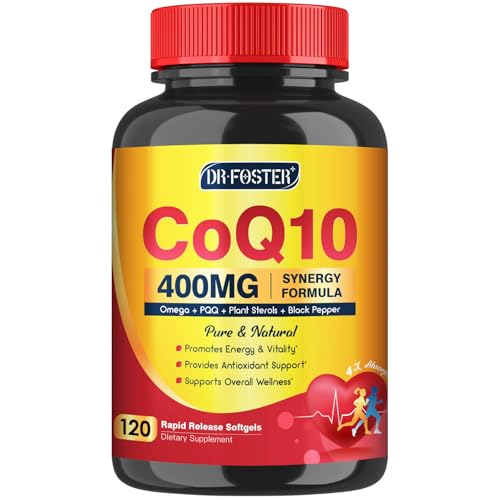
That’s a genuinely interesting result, but the sample size (11 patients) is small enough that it should be read as a promising mechanistic signal rather than definitive proof. It’s also a trial of CoQ10 added on top of an existing medication, not CoQ10 as a standalone fibromyalgia treatment.
A Larger, More Sobering Trial
A larger and more recent trial complicates the picture in an important way. A 2025 randomized, double-blind, placebo-controlled crossover study out of Spain enrolled 110 fibromyalgia patients and had 89 complete two three-month treatment periods, testing a combination supplement of CoQ10, tryptophan, and magnesium (not CoQ10 alone) against placebo, with fatigue as the primary outcome [3].
The result: fatigue actually improved more in the placebo group than in the supplement group, a non-significant reduction. The supplement group did show significant improvements in pain intensity, sleep quality, and overall functional impact, and the total symptom impact score improved significantly after three months on the supplement [3].
Two honest takeaways from this trial. First, it tested a three-ingredient combination, so it’s not possible to isolate how much of the pain, sleep, and functional benefit came from CoQ10 specifically versus the tryptophan or magnesium. Second, and more important, the primary endpoint the researchers set out to test, fatigue, didn’t improve. If your main fibromyalgia complaint is exhaustion rather than pain, this trial doesn’t support CoQ10 (or this combination) as the answer.

Where This Leaves the Evidence
Taken together: there’s a real, HPLC-measured biological finding that fibromyalgia patients tend to have lower CoQ10 and more mitochondrial oxidative stress in their blood cells than healthy people. There’s a small but well-designed trial showing CoQ10 added to pregabalin outperformed pregabalin alone on pain, anxiety, and the same oxidative stress markers. And there’s a larger trial of a CoQ10-containing combination supplement showing real benefit for pain, sleep, and function, but not for fatigue specifically, and without isolating CoQ10’s individual contribution.
That’s a reasonable, if incomplete, evidence base, stronger than a lot of supplements get for fibromyalgia, but not strong enough to call CoQ10 a proven fibromyalgia treatment. If you’re managing fibromyalgia and considering CoQ10, it’s worth framing it to your doctor as a well-tolerated adjunct with real trial support for pain and functional symptoms specifically, not as a fatigue cure, and not as a replacement for whatever pharmacological or physical therapy plan you already have in place.


References
- Mitochondrial dysfunction and mitophagy activation in blood mononuclear cells of fibromyalgia patients: implications in the pathogenesis of the disease. Arthritis Research & Therapy, 2010
- Coenzyme Q10 supplementation alleviates pain in pregabalin-treated fibromyalgia patients via reducing brain activity and mitochondrial dysfunction. Free Radical Research, 2019
- Effects of Coenzyme Q10, Tryptophan, and Magnesium Supplementation on Fatigue in Patients with Fibromyalgia – A Randomized Trial. Journal of Dietary Supplements, 2025
These statements have not been evaluated by the Food and Drug Administration. This information is not intended to diagnose, treat, cure, or prevent any disease. Content is for informational purposes only and is not medical advice; consult a qualified healthcare provider before starting any supplement. As an Amazon Associate we earn from qualifying purchases.