As women navigate midlife and the approach of menopause, questions about reproductive health can become more prominent. For some, this includes considering ways to support fertility, especially when planning for pregnancy over the age of 40. Coenzyme Q10 (CoQ10), particularly its active form ubiquinol, is a compound that has garnered interest in this area.
This article aims to provide an evidence-based overview of the current understanding regarding CoQ10’s potential role in supporting reproductive health for women over 40. We will explore how CoQ10 might interact with biological processes relevant to fertility, drawing on available research findings.
Understanding CoQ10 and Its Role in the Body
Coenzyme Q10 is a naturally occurring antioxidant found in almost every cell in the human body. It plays a crucial role in energy production within the mitochondria, often referred to as the ‘powerhouses’ of the cell. CoQ10 exists in two forms: ubiquinone, the oxidized form, and ubiquinol, the active antioxidant form. As we age, the body’s natural production of CoQ10 may decline, and the ability to convert ubiquinone to ubiquinol can also diminish.
Beyond its role in energy metabolism, CoQ10 also functions as a powerful antioxidant, helping to neutralize free radicals that can cause cellular damage. This dual role in energy production and antioxidant protection is relevant to many bodily functions, including those involved in reproductive health.
CoQ10 and Ovarian Aging: What the Research Suggests
Ovarian aging is a natural process characterized by a decline in both the quantity and quality of oocytes (eggs). This decline is often associated with reduced mitochondrial function and increased oxidative stress within the oocytes [1]. Given CoQ10’s roles in energy production and antioxidant defense, researchers have investigated its potential to support ovarian health as women age.
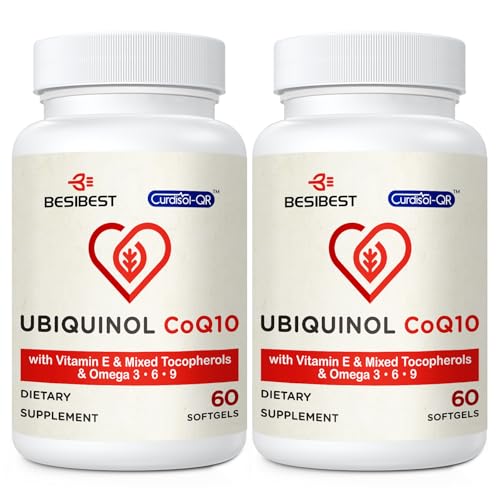
One area of focus has been the impact of CoQ10 on oocyte quality. Studies suggest that CoQ10 supplementation may help restore oocyte mitochondrial function during reproductive aging [1]. Additionally, a systematic review and meta-analysis indicated that antioxidants, including CoQ10, might offer benefits for women with ovarian aging [2]. While promising, it’s important to note that the strength of evidence can vary, and further large-scale studies are often needed.
Research in animal models has also explored CoQ10’s effects on reproductive cells. For instance, ubiquinol-10 was observed to delay postovulatory oocyte aging by improving mitochondrial renewal in pigs [3]. Another comparative study looked into alterations of CoQ redox status in aging pigs, mice, and worms, noting a decline with age [4].
CoQ10 and Assisted Reproductive Technology (ART) Outcomes
For women over 40 undergoing assisted reproductive technologies (ART) such as in vitro fertilization (IVF), supporting oocyte quality is a significant consideration. Some research has explored whether CoQ10 supplementation might influence ART outcomes.

A study in 2023 investigated the effect of CoQ10 supplementation on ART treatment and oocyte quality in older women [5]. Another review from 2021 also examined whether Coenzyme Q10 supplementation could improve human oocyte quality [6]. While some studies suggest potential benefits, the overall evidence for a definitive impact on live birth rates across all ART scenarios is still developing. A systematic review and network meta-analysis on adjuvant treatment strategies in ovarian stimulation for poor responders undergoing IVF also considered CoQ10 among other interventions [7].
In a randomized controlled trial, pretreatment with CoQ10 was shown to improve ovarian response and embryo quality in low-prognosis young women with decreased ovarian reserve [8]. While this study involved younger women, it highlights a mechanism through which CoQ10 might exert its effects. The evidence strength for this topic is considered moderate, indicating that while there are supportive findings, more extensive and robust studies are beneficial to draw broader conclusions.
Considering Ubiquinol: The Active Form
When considering CoQ10 supplementation, the form of CoQ10 can be a factor. Ubiquinol is the active, antioxidant form of CoQ10 that the body uses directly. While the body can convert ubiquinone to ubiquinol, this conversion process may become less efficient with age [4].

For women over 40, supplementing with ubiquinol may offer a more readily available form of CoQ10 for the body to utilize, potentially bypassing any age-related conversion challenges. This might be particularly relevant for supporting cellular energy and antioxidant processes in aging reproductive cells. Research in animal models has specifically highlighted ubiquinol-10’s role in improving mitochondrial renewal [3].
Important Considerations and Safety
While CoQ10 is generally well-tolerated, it is always important to consider individual health circumstances. The effects of CoQ10 in humans have been studied over time, including a follow-up study on life-long oral supplementation in rats [9], which helps to build a safety profile.
The current evidence regarding CoQ10 and fertility for women over 40 is moderate. While promising research exists, particularly concerning oocyte quality and mitochondrial function, it’s crucial to understand that CoQ10 is a supportive supplement and not a standalone solution for age-related fertility challenges. Research in this area is ongoing, and findings can vary between studies, with some being smaller or involving specific populations.

References
- Coenzyme Q10 restores oocyte mitochondrial function and fertility during reproductive aging. Aging cell, 2015
- Antioxidants and Fertility in Women with Ovarian Aging: A Systematic Review and Meta-Analysis. Advances in nutrition (Bethesda, Md.), 2024
- Ubiquinol-10 delays postovulatory oocyte aging by improving mitochondrial renewal in pigs. Aging, 2020
- A comparative study into alterations of coenzyme Q redox status in ageing pigs, mice, and worms. BioFactors (Oxford, England), 2014
- The Effect of CoQ10 supplementation on ART treatment and oocyte quality in older women. Human fertility (Cambridge, England), 2023
- Does Coenzyme Q10 Supplementation Improve Human Oocyte Quality?. International journal of molecular sciences, 2021
- Adjuvant treatment strategies in ovarian stimulation for poor responders undergoing IVF: a systematic review and network meta-analysis. Human reproduction update, 2020
- Pretreatment with coenzyme Q10 improves ovarian response and embryo quality in low-prognosis young women with decreased ovarian reserve: a randomized controlled trial. Reproductive biology and endocrinology : RB&E, 2018
- The role of coenzyme Q-10 in aging: a follow-up study on life-long oral supplementation Q-10 in rats. Gerontology, 1995
These statements have not been evaluated by the Food and Drug Administration. This information is not intended to diagnose, treat, cure, or prevent any disease. Content is for informational purposes only and is not medical advice; consult a qualified healthcare provider before starting any supplement. As an Amazon Associate we earn from qualifying purchases.