CoQ10 dosing questions almost always come down to two things: whether to take it with food, and whether morning or evening timing matters. The research points toward one factor mattering far more than the other.
With Food Matters More Than Time of Day
Because CoQ10 is fat-soluble and absorbed passively alongside dietary lipids, taking it with a meal containing some fat is the single most impactful timing decision, more so than whether that meal happens to be breakfast or dinner. Taking CoQ10 on an empty stomach meaningfully reduces the amount that actually gets absorbed, regardless of what form (ubiquinol or ubiquinone) is used.
Morning vs. Evening: What the Evidence Actually Supports
Bioavailability research on CoQ10 formulations hasn’t identified a meaningful difference in absorption between morning and evening dosing when the compound is taken with food either way [1]. Peak plasma concentration after an oral dose typically occurs several hours later, well outside the window where morning-vs-evening distinctions would matter for a fat-soluble nutrient with a multi-day steady-state accumulation pattern. In practice, CoQ10 doesn’t behave like a short-acting stimulant that needs precise daytime timing.

Splitting the Dose
For doses above roughly 200 mg per day, which includes the 300 mg/day (100 mg three times daily) protocol used in the Q-SYMBIO heart failure trial, splitting the total across two or three meals rather than taking it all at once tends to produce more consistent blood levels, since absorption efficiency doesn’t improve simply by taking more at one sitting. For lower daily doses in the 100 to 200 mg range, a single meal is generally sufficient.

A Practical Routine
Pick whichever meal is most consistent day to day, breakfast for some people, dinner for others, and take CoQ10 with it. Consistency of timing relative to food matters more than which specific meal is chosen. For higher doses, splitting between two meals (for example, breakfast and dinner) is a reasonable default that matches the dosing pattern used in the largest clinical trials to date.

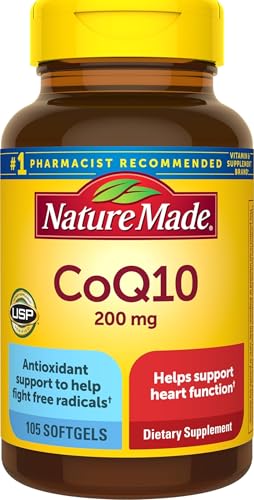
What Actually Counts as Taking It With Food
The instruction to take this with food is doing more work than it appears, because what matters is the fat in the meal rather than the fact of eating. A meal with essentially no fat behaves much closer to an empty stomach for a fat-soluble compound, which is how someone can follow the label faithfully and still absorb comparatively little.
It does not take a large or heavy meal. A normal meal containing some fat is the target, and the common failure is not a small breakfast but a fat-free one: coffee alone, dry toast, or a piece of fruit on the way out of the door. If your most reliable moment of the day happens to be a fat-free one, the more useful adjustment is usually moving the capsule to a different meal rather than changing what you eat.
When Splitting the Dose Is Worth the Extra Effort
Splitting a larger daily amount across meals is a reasonable default, but it carries a cost worth naming: every additional dose is another chance to forget one. A split schedule only delivers the benefit if it is actually followed, and a plan followed most days often produces less over a month than a simpler one followed nearly always.
So the honest way to decide is to ask which schedule you will genuinely keep. If two meals a day are fixed points in your routine, splitting costs you almost nothing. If they are not, a single reliable fat-containing meal is a defensible choice, and consistency over weeks matters more than optimizing any single day. For anyone taking a larger amount on a clinician’s advice, the schedule they specified takes precedence over this general reasoning.
Does the meal need to be large, or just contain some fat?
Some fat is the operative part. An ordinary meal containing fat is enough, and a larger meal is not better for this purpose, which is why a small meal with fat beats a substantial one without any.
What if I forget and take it on an empty stomach?
A single missed occasion is not a problem to correct for; less is absorbed that time and the routine continues. Because levels build over weeks rather than hours, consistency across the month is what matters rather than any one dose.
References
- Comparative Bioavailability of Different Coenzyme Q10 Formulations in Healthy Elderly Individuals. Nutrients, 2020
These statements have not been evaluated by the Food and Drug Administration. This information is not intended to diagnose, treat, cure, or prevent any disease. Content is for informational purposes only and is not medical advice; consult a qualified healthcare provider before starting any supplement. As an Amazon Associate we earn from qualifying purchases.