Myalgic encephalomyelitis/chronic fatigue syndrome (ME/CFS) communities have discussed CoQ10 for years, largely because mitochondrial dysfunction is one of the more consistent biological findings in ME/CFS research. That doesn’t automatically mean supplementation works, but there is now a real body of randomized controlled trial data to look at rather than relying on forum anecdotes alone.
The Biological Rationale
Research has associated lower CoQ10 status in ME/CFS patients with greater fatigue severity, autonomic symptoms, and neurocognitive complaints, and has flagged it as a possible contributor to elevated cardiovascular risk in this population. That correlational finding is the basis for testing CoQ10 supplementation as an intervention, not proof that raising CoQ10 levels will resolve symptoms, since correlation between low levels and worse symptoms doesn’t establish that supplementation reverses the relationship.
What the Larger Trials Found
The most substantial trial to date randomized 207 ME/CFS patients to 200 mg CoQ10 plus 20 mg NADH daily, or placebo, for 12 weeks. The active group showed a statistically significant reduction in cognitive fatigue perception and overall fatigue impact score (FIS-40), along with improvement in health-related quality of life measures, and improvements in sleep duration and habitual sleep efficiency emerged at the 4- and 8-week follow-ups respectively [1].
An earlier, smaller proof-of-concept trial (80 patients, 8 weeks, same CoQ10+NADH combination) found a significant reduction in maximum heart rate during a cycle ergometer test and a reduction in perceived fatigue across follow-up visits, though pain and sleep did not improve in that particular trial [2].
A Different Combination: CoQ10 Plus Selenium
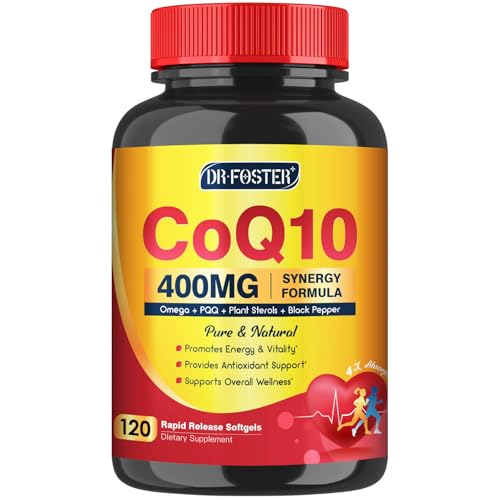
A separate open-label trial tested a different pairing, 400 mg CoQ10 with 200 mcg selenium daily for 8 weeks in 27 ME/CFS patients, and found a significant improvement in overall fatigue severity and global quality of life from baseline, with the authors framing the mechanism as modulating oxidative stress and inflammatory status. This being an open-label design (no placebo control, participants and researchers both knew what was being given) is an important limitation; open-label trials are more prone to placebo effect and expectation bias than the double-blind, placebo-controlled trials above.


Where the Evidence Is Honestly Weaker
A 2025 systematic review of dietary supplements for ME/CFS-related fatigue noted that while several interventions, including CoQ10-selenium and NADH-CoQ10 combinations, showed statistically significant fatigue reductions in their respective trials, small sample sizes and missing data across the field prevent firm conclusions being drawn at a evidence-synthesis level. In plain terms: individual trials look encouraging, but the field as a whole hasn’t reached the size and consistency of evidence that would let a clinician say “this reliably works” with full confidence.

Practical Takeaway
If you have ME/CFS and are considering CoQ10, the strongest trial data supports the CoQ10 plus NADH combination at doses in the 200 mg CoQ10 range, taken consistently for at least 8 to 12 weeks before evaluating whether it’s helping, since none of the positive trials showed meaningful change in the first few weeks. This is genuinely evidence-supported territory, not just a wellness trend, but it should be discussed with a physician managing your ME/CFS, particularly around ruling out other causes of fatigue and coordinating with any other supplements or medications you’re taking.
References
- Effect of Dietary Coenzyme Q10 Plus NADH Supplementation on Fatigue Perception and Health-Related Quality of Life in Individuals with Myalgic Encephalomyelitis/Chronic Fatigue Syndrome: A Prospective, Randomized, Double-Blind, Placebo-Controlled Trial. Nutrients, 2021
- Effect of coenzyme Q10 plus NADH supplementation on maximal heart rate after exercise testing and fatigue perception in chronic fatigue syndrome patients. Clinical Nutrition, 2016
These statements have not been evaluated by the Food and Drug Administration. This information is not intended to diagnose, treat, cure, or prevent any disease. Content is for informational purposes only and is not medical advice; consult a qualified healthcare provider before starting any supplement. As an Amazon Associate we earn from qualifying purchases.