As women navigate midlife and menopause, many become more attuned to their nutritional needs and potential supplements. Coenzyme Q10 (CoQ10), particularly in its ubiquinol form, is a subject of interest. When considering CoQ10, a common question arises regarding the best way to take it: liquid or capsule?
Understanding the differences in how various CoQ10 formulations are absorbed by the body is key to making informed choices. While research on this specific comparison for women is still developing, we can look at existing evidence on CoQ10 absorption in general to help shed some light.
Understanding CoQ10 Absorption: The Basics
CoQ10 is a fat-soluble compound, which means it dissolves in fats and oils rather than water. This characteristic significantly influences how it is absorbed in the digestive system. For any fat-soluble nutrient to be effectively absorbed, it typically needs to be emulsified (mixed with fats) to pass through the intestinal wall and enter the bloodstream.
The bioavailability of CoQ10 refers to the proportion of the ingested CoQ10 that is absorbed and becomes available for use by the body. Because CoQ10 is fat-soluble and has a relatively high molecular weight, its absorption can be challenging. Various formulation strategies aim to improve this bioavailability, regardless of whether the final product is liquid or in a capsule form.
How Formulations Aim to Enhance Absorption
Manufacturers employ different techniques to enhance the absorption of CoQ10. These often involve making the CoQ10 more ‘soluble’ or more easily dispersed in the digestive tract. Some formulations use lipid-based carriers or technologies that create smaller particles, which may improve absorption. For instance, nanostructured lipid carriers have been explored for compounds like ubiquinone (CoQ10) to potentially enhance bioavailability [1]. Similarly, amphiphilic nanocarrier systems have been investigated for delivering other fat-soluble compounds, suggesting a broader interest in these advanced delivery methods [2].
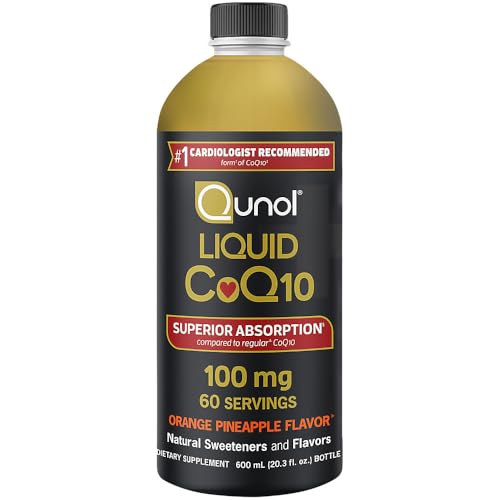
Some CoQ10 formulations are designed to be water-soluble, which can be achieved through specific manufacturing processes. Studies have looked at the relative bioavailability of different water-soluble CoQ10 forms [3]. Other research has compared the bioavailability of various tablet-grade CoQ10 formulations, noting that some formulations demonstrated better bioavailability properties than others [4].
Liquid CoQ10: Potential Advantages and Considerations
Liquid CoQ10 formulations often incorporate the CoQ10 into an oil base or a suspension designed for better dispersion. The idea behind liquid forms is that the CoQ10 may already be in a more solubilized or emulsified state, potentially making it easier for the body to absorb. This could be particularly relevant for individuals who have difficulty swallowing capsules or who may have compromised digestive function.
One study, while focused on pediatric individualized therapy, examined the relative bioavailability of a CoQ10 formulation, highlighting the importance of formulation for specific populations [5]. While this specific study doesn’t directly compare liquid vs. capsule for women, it underscores that the ‘formulation’ itself – which can be liquid or encapsulated – is a primary driver of absorption. The specific carrier oils or emulsifiers used in a liquid product could play a significant role in its absorption profile.

CoQ10 Capsules: Varying Formulations and Absorption
CoQ10 capsules are a very common delivery method. Within the capsule form, there’s a wide range of formulations. Some capsules contain CoQ10 powder, while others contain CoQ10 dissolved in an oil (often called ‘softgels’). The latter, where CoQ10 is already dissolved in an oil, may offer an absorption advantage over powdered forms, as the CoQ10 is pre-solubilized, mimicking the emulsification process that would occur in the gut.
Research has indeed assessed the bioavailability of various oral CoQ10 formulations, including those in capsule form. For example, a study in dogs evaluated the bioavailability of different oral CoQ10 formulations, providing insights into how different preparations are absorbed [6]. This indicates that even among capsules, the specific formulation within the capsule is a critical factor influencing absorption, rather than the capsule shell itself.
It’s important to recognize that a ‘capsule’ is merely the vessel. The true determinant of absorption often lies in what’s inside the capsule and how it’s prepared – whether it’s a dry powder, an oil suspension, or a more advanced delivery system.

Comparing Liquid CoQ10 Absorption and Capsules: What the Evidence Suggests
When directly comparing liquid CoQ10 absorption to capsules for women in midlife, the specific evidence is limited. There isn’t a large body of research that definitively states one form is universally superior to the other across all individuals and all formulations. Instead, the literature emphasizes that the *formulation itself* is the most critical factor for CoQ10 bioavailability, regardless of whether it’s presented in a liquid or encapsulated format.
Both liquid and capsule forms can be engineered to enhance CoQ10 absorption. For example, a liquid CoQ10 product that uses advanced emulsification technology may offer better absorption than a basic powdered CoQ10 capsule. Conversely, a softgel capsule containing CoQ10 dissolved in an optimized lipid base may outperform a simple liquid suspension. The key is how the CoQ10 is prepared to overcome its fat-solubility and absorption challenges, rather than just its final physical state.
Therefore, women considering CoQ10 should look beyond just ‘liquid’ or ‘capsule’ and consider the specific formulation details provided by the manufacturer, such as whether it’s a solubilized, emulsified, or nano-formulated product. These details are more likely to influence liquid CoQ10 absorption and overall bioavailability than the form factor alone.

References
- Formulation and characterization of nanostructured lipid carrier of ubiquinone (Coenzyme Q10). Journal of biomedical nanotechnology, 2013
- Amphiphilic Nanocarrier Systems for Curcumin Delivery in Neurodegenerative Disorders. Medicines (Basel, Switzerland), 2018
- Relative bioavailability of two forms of a novel water-soluble coenzyme Q10. Annals of nutrition & metabolism, 2008
- A new Coenzyme Q10 tablet-grade formulation (all-Q) is bioequivalent to Q-Gel and both have better bioavailability properties than Q-SorB. Journal of medicinal food, 2005
- Relative bioavailability of coenzyme Q10 formulation for paediatric individualized therapy. The Journal of pharmacy and pharmacology, 2017
- Bioavailability assessment of oral coenzyme Q10 formulations in dogs. Drug development and industrial pharmacy, 2002
These statements have not been evaluated by the Food and Drug Administration. This information is not intended to diagnose, treat, cure, or prevent any disease. Content is for informational purposes only and is not medical advice; consult a qualified healthcare provider before starting any supplement. As an Amazon Associate we earn from qualifying purchases.