As women navigate midlife and menopause, understanding how to best support the body’s needs becomes increasingly relevant. Coenzyme Q10 (CoQ10) is a compound that plays a role in cellular energy production, and its levels can naturally decline with age. For those considering CoQ10 supplementation, optimizing its absorption is a common consideration.
CoQ10 is a fat-soluble compound, which means its bioavailability – the extent to which it enters the circulation and is available to exert its effects – can be influenced by various factors. This article explores practical strategies to potentially enhance CoQ10 absorption, particularly for women over 40.
Understanding CoQ10 Bioavailability
CoQ10’s fat-soluble nature presents a challenge for absorption within the gastrointestinal tract. For a compound to be absorbed, it typically needs to be dissolved in the gut lumen and then transported across the intestinal wall [1]. Because CoQ10 is not readily soluble in water, its absorption can be limited. This is why many formulations and consumption methods aim to overcome this inherent challenge.
The journey of CoQ10 from supplement to bloodstream involves several steps, including dissolution, emulsification, and transport. Any factor that improves these steps can potentially lead to better bioavailability [2]. For women over 40, physiological changes might also influence nutrient absorption, making strategies to enhance CoQ10 uptake particularly relevant.

The Importance of Form: Ubiquinol vs. Ubiquinone
CoQ10 exists in two primary forms in the body: ubiquinone (the oxidized form) and ubiquinol (the reduced, active antioxidant form). While the body can convert ubiquinone to ubiquinol, the efficiency of this conversion may decrease with age [1]. Ubiquinol is generally considered to be more bioavailable than ubiquinone, meaning it may be absorbed more readily [2].

When selecting a CoQ10 supplement, considering the form can be a practical step towards potentially enhancing absorption. For women over 40, choosing a ubiquinol formulation might offer a more direct approach to increasing circulating CoQ10 levels, as it bypasses the need for the body to convert it from ubiquinone.
Taking CoQ10 with Food, Especially Fats
Due to its fat-soluble nature, CoQ10 absorption is significantly enhanced when consumed with food, particularly meals containing dietary fats [1]. Fats stimulate the release of bile, which helps to emulsify CoQ10, breaking it down into smaller particles that are easier for the body to absorb. This is a fundamental principle for maximizing the uptake of many fat-soluble nutrients.
For women incorporating CoQ10 into their daily routine, a simple yet effective strategy is to take the supplement alongside a meal that includes healthy fats. Examples could include avocados, nuts, seeds, olive oil, or fatty fish. This can help create an optimal environment in the digestive tract for CoQ10 dissolution and absorption.
Advanced Formulations: Emulsified and Nanoparticle Delivery Systems
Beyond consuming CoQ10 with food, advancements in supplement formulation aim to directly address its low water solubility. Various technologies have been developed to improve CoQ10’s bioavailability [2]. These often involve creating formulations where CoQ10 is already in a more absorbable state.
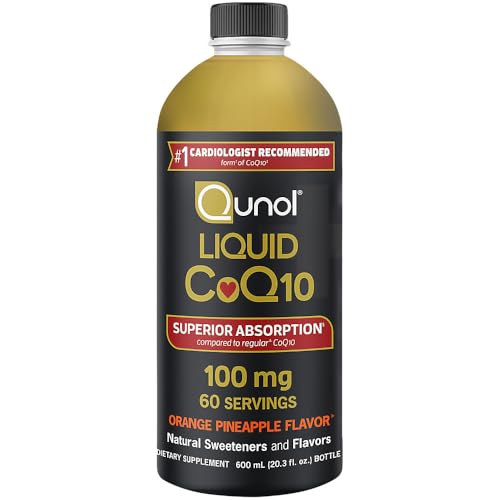
Emulsified forms of CoQ10, for example, pre-mix CoQ10 with oils or other carriers to create fine dispersions, mimicking the effect of dietary fats in the gut [3]. Nanotechnology-based delivery systems, which encapsulate CoQ10 in extremely small particles, are also being explored to enhance absorption and tissue delivery [4][2]. Some formulations may also utilize cyclodextrins, which are sugar molecules that can encapsulate CoQ10, improving its solubility and absorption [5].
Considering the Dosage and Timing
While CoQ10 absorption is generally enhanced with food, the overall dosage and timing can also play a role in maintaining consistent levels. Some research suggests that dividing the daily CoQ10 dose into smaller, more frequent administrations throughout the day, rather than one large dose, might contribute to more sustained blood levels [1].
However, for many, the convenience of a once-daily dose with a meal is a practical approach. The optimal dosage can vary based on individual needs and health considerations, and it’s always advisable to consult with a healthcare professional regarding appropriate supplementation strategies.
References
- Coenzyme Q10: absorption, tissue uptake, metabolism and pharmacokinetics. Free radical research, 2006
- Bioavailability enhancement of coenzyme Q(10): An update of novel approaches. Archiv der Pharmazie, 2024
- Bioavailability enhancement of coenzyme Q10: an extensive review of patents. Recent patents on drug delivery & formulation, 2010
- Novel Nanotechnological Strategies for Skin Anti-aging. Current pharmaceutical biotechnology, 2023
- Cyclodextrins and antioxidants. Critical reviews in food science and nutrition, 2014
These statements have not been evaluated by the Food and Drug Administration. This information is not intended to diagnose, treat, cure, or prevent any disease. Content is for informational purposes only and is not medical advice; consult a qualified healthcare provider before starting any supplement. As an Amazon Associate we earn from qualifying purchases.